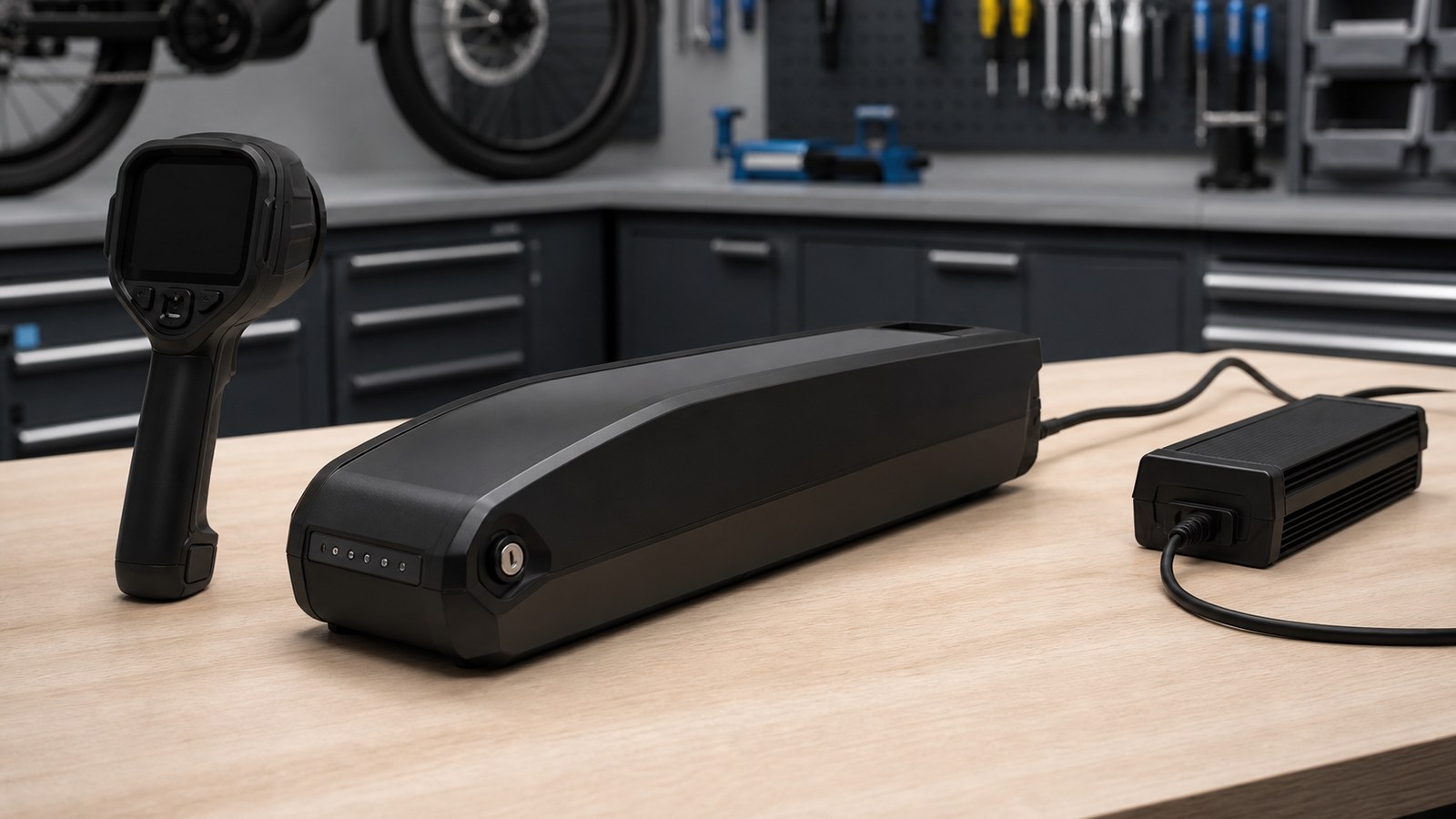
E-bike charging is often treated like a household habit: plug in the battery, wait, ride again. From an engineering standpoint, it is a matched electrical system. The battery pack, charger, drivetrain, connectors, firmware, thermal design, and storage location all matter.
This article is not legal, insurance, or emergency-safety advice, and it is not a review of a specific e-bike. TVG has not tested any battery system for this piece. The goal is to give technically minded riders, maker labs, and STEM mobility teams a checklist for evaluating charging setups before they become routine.
Start with certification and matching parts
UL Solutions describes UL 2849 as a certification program for e-bikes that considers the electrical drivetrain, battery, and charger system combination. That system-level wording matters. A charger that physically fits is not automatically the right charger, and a replacement pack should not be judged only by voltage and shape.
PeopleForBikes explains e-bikes as bicycles with an electric motor that assists pedaling. That simple definition hides a lot of design variety: battery placement, connector design, charge port access, controller behavior, and software limits all differ across models.
The checklist
- Use the intended charger: match the charger to the battery system, not just the connector.
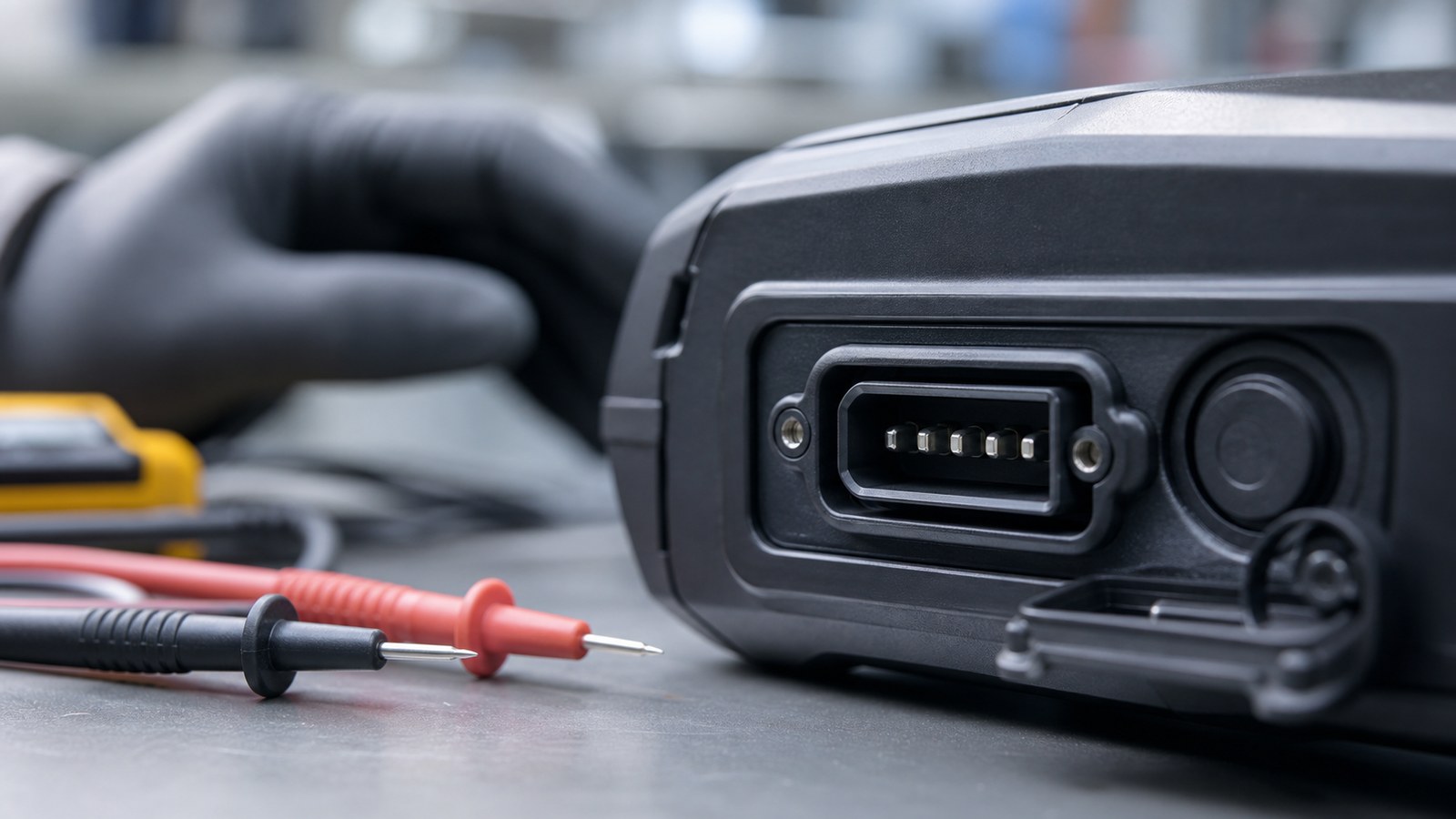
- Inspect connectors: look for looseness, contamination, bent pins, heat discoloration, or strain on the cable.
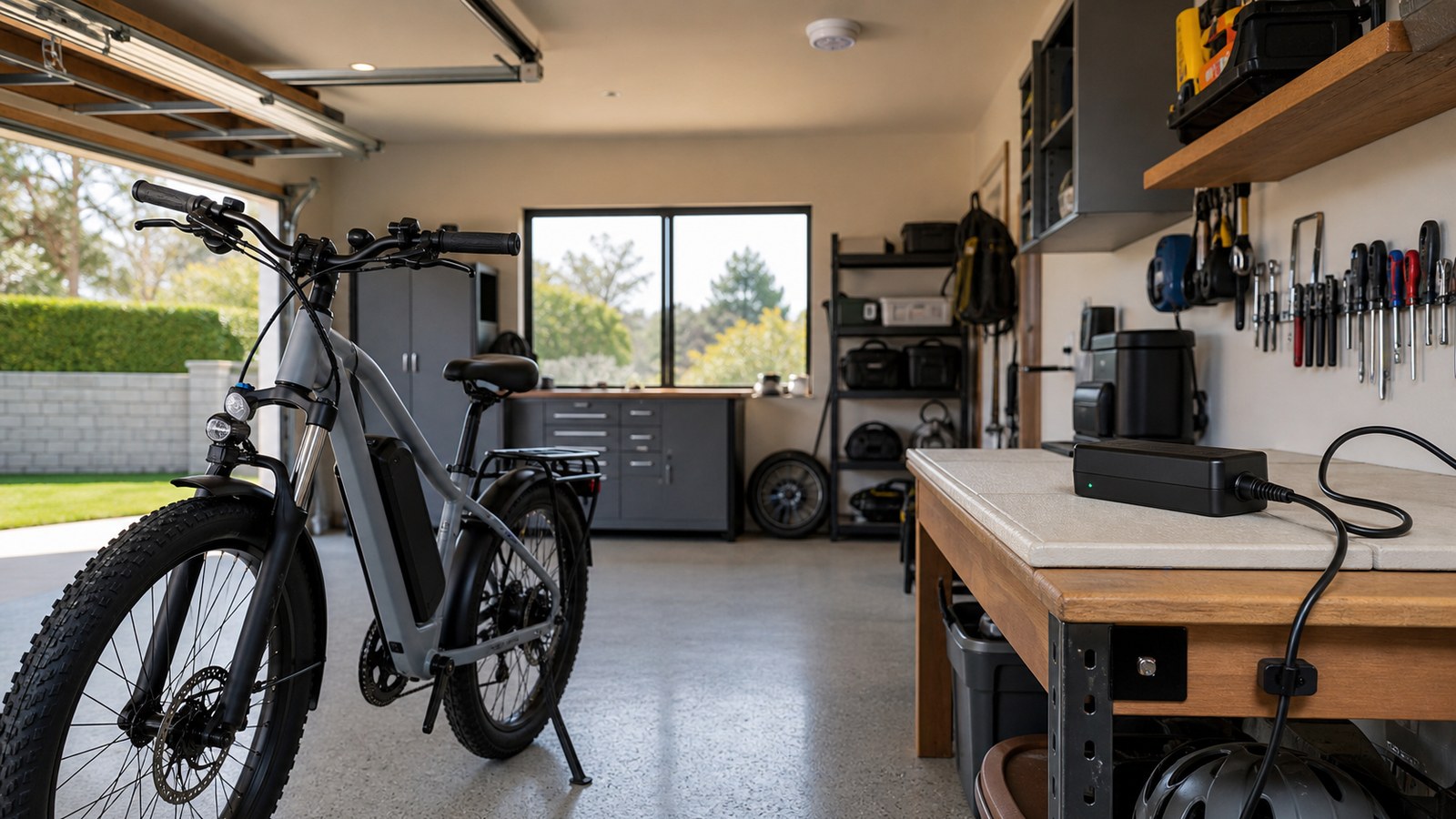
- Leave space: charge where air can circulate and where the pack is not buried under bags, fabric, or workshop clutter.
- Watch behavior: stop using a pack that changes shape, smells unusual, overheats, or behaves differently after impact.
- Keep records: note battery age, mileage, charging issues, and service history, especially for shared fleet or school use.
Why maker and STEM teams should care
Micromobility is an accessible way to teach motors, energy storage, controls, mechanical packaging, and standards. But student projects and community labs should separate learning from improvising with unknown battery packs. Salvaged cells, mystery chargers, and unverified wiring belong in controlled instructional environments with qualified supervision—not in everyday transport.
TVG Take
The most important spec is not peak wattage. It is whether the battery, charger, connectors, and service path are designed and maintained as one system. For buyers, that means asking about UL 2849 or equivalent certification, replacement-part availability, charger labeling, and repair support before treating an e-bike as a durable transportation tool.
TVG will continue watching micromobility through an engineering lens: batteries, serviceability, standards, and whether products make safe maintenance easy for normal owners.
Questions to ask before buying
For a new e-bike, ask whether the complete electrical system is certified, how replacement batteries and chargers are sourced, whether the battery can be serviced or recycled through official channels, and what the manual says about temperature and storage. For used e-bikes, ask for charger history and battery age before negotiating on accessories.
Those questions are not about fear. They are about maintenance. A transportation device that depends on a high-energy battery should make safe charging behavior easy to understand and easy to repeat.
For shared programs, assign one storage and charging routine instead of letting every rider improvise. That includes where batteries rest, who checks damaged connectors, how questionable packs are removed from service, and where manuals and replacement-part records live. The routine should be simple enough that a new volunteer can follow it without guessing.
That clarity also helps buyers compare products beyond range claims and motor wattage.
Related TVG reading
For more engineering-first context, compare this piece with E-Bike Battery Charging Setup: An Engineering Checklist for Homes, Shops and STEM Programs, Secure AI Coding Agents Need a Deployment Risk Checklist, Android Auto Pullback Makes In-Car AI an Engineering Reliability Test.
Sources
- UL Solutions: E-bikes certification and testing to UL 2849
- PeopleForBikes: electric bikes overview
- Bosch eBike battery guide (403 to cron environment during verification)